
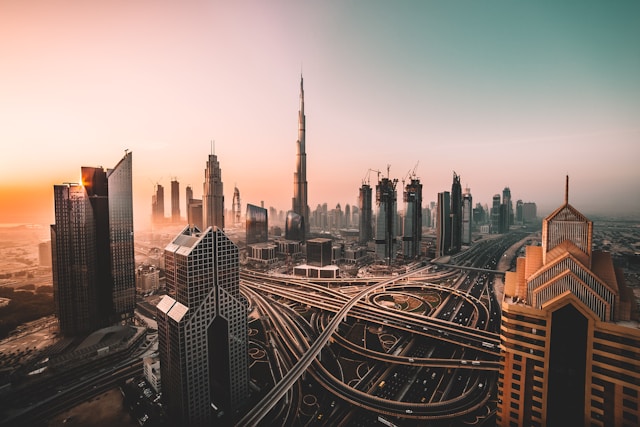
Dubai is an amazing city. In recent decades it has been transformed from a modest port into a global financial/tourism hub. One key aspect involved attracting millions of expats (90% of its population), millionaires, and businesses with promises of security, efficiency, and Western-style amenities. This included perks like amazing residences and hotels along with Michelin-starred dining. The basic deal also invplved tolerant social norms alongside strict controls on dissent.
Opinions varied on this super-luxury lifestyle, but it certainly had millions of fans. Dubai and other Gulf cities built their success on the core promise of being “not really in the Middle East”by offering luxury, stability, low taxes, expat-friendly environments, world-class infrastructure, and minimal conflict risk despite the region’s turmoil.
The Iran war has punctured this illusion as explained in a recent article in the Wall Street Journal.
The article explains how Iranian attacks have directly hit civilian and iconic sites in the UAE (especially Dubai), including the Burj Al Arab hotel, Dubai’s port, airport, Fairmont The Palm hotel, and other landmarks, killing several people and causing visible damage despite most projectiles being intercepted by air defenses. This has shattered the long-cultivated perception of Gulf states (particularly Dubai, but also Saudi Arabia, Qatar, and others) as “safe havens” insulated from Middle Eastern volatility.
This could have devastating effects on the economies of the region, and also permenantly affect the regions branding. The war may impose a lasting “risk premium,” eroding the “Switzerland of the region” pitch. Events over the next weeks and months will be critical for the region.
